6 Checks Before You Book an Art Fair Stand
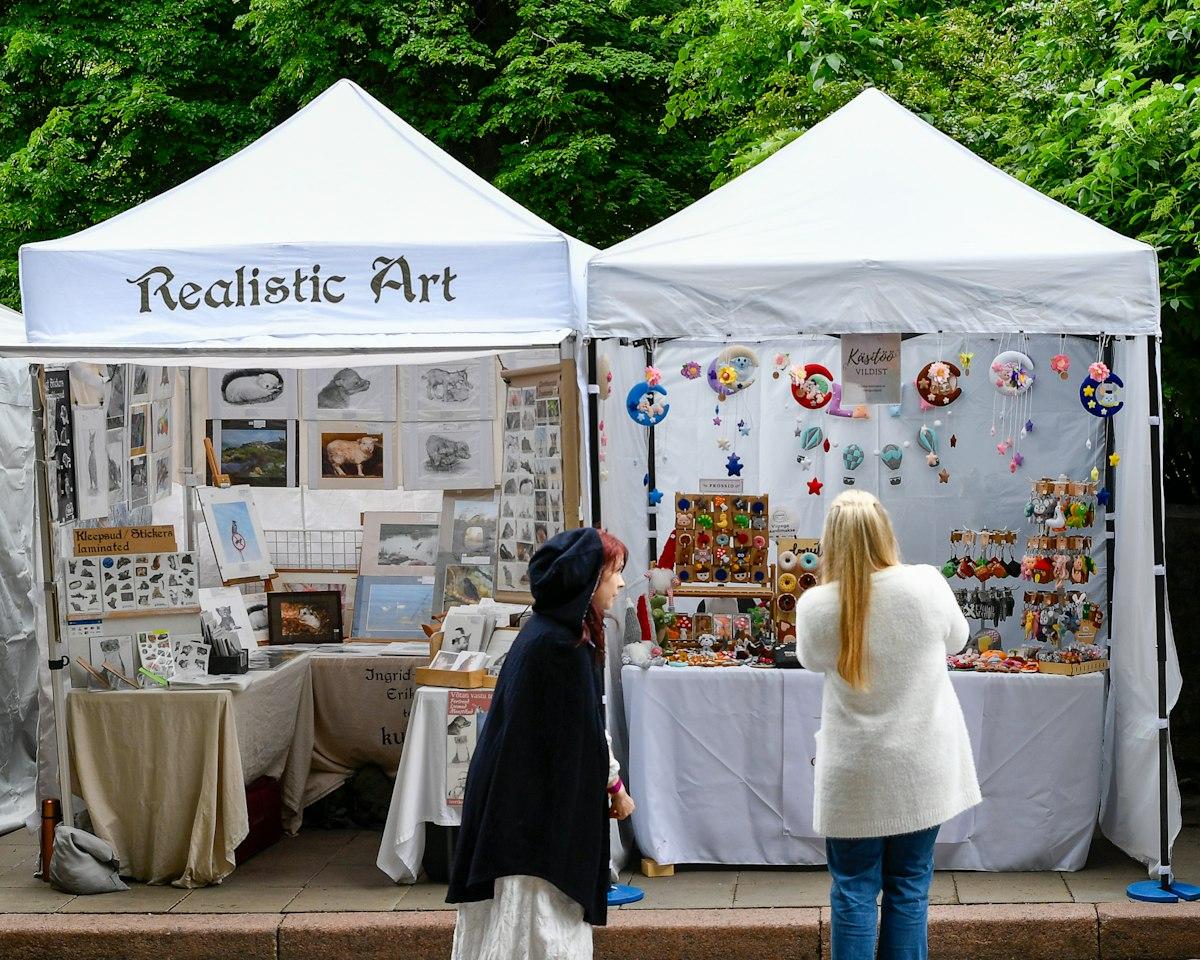
"Lots of people stopped by." It is what artists say after almost every art fair, and it is the sentence that hides the number that matters.
Footfall costs nothing. Sales have to pay back the stand fee, the van and the hotel room. Here are six checks to run before you book the next one.
1. Work out your break-even before you read the program
The stand fee is the smallest honest line. Add travel, lodging, crates, hooks, printed cards, framing and the card reader fees.
Here is an illustrative example, not a benchmark. A stand at 600 USD, travel and a hotel at 400 USD, and 100 USD of materials come to 1,100 USD. If your average sale is 220 USD, you need five sales before the first dollar of profit.
Now put in your own numbers. Ask whether five strangers will realistically buy from you in one weekend, and count your two days of setup as a cost too.
2. Ask last year's exhibitors, not the organizer
The organizer sells stands, and the visitor figure in the brochure counts people through the door, not people with a wallet open. Message three artists who showed last year in a similar medium and ask what they actually took home.
Useful questions are short. Did you cover your costs? Did buyers come on opening night or on Saturday? Would you book the same fair again? Most artists answer honestly, because they remember how the weekend felt.
The exhibitor list is also a clue. If it is mostly the same names every year, either the fair works or the habit is strong, and the messages will tell you which.
3. Check the price range of the room
A fair for decorative gifts and a fair for collectors can sit in the same city and have nothing in common. If your work sells for 150 USD and the typical buyer arrives with a budget of several thousand, you are in the wrong room. The reverse is just as true.
Look at photos from previous years. What hangs on the walls, how big is it, and are there price tags in sight? The last question tells you more than the brochure does.
Photo by laura adai on Unsplash
4. Plan to leave with email addresses, not only sales
Most visitors will not buy at the stand, and a good share of them will remember you a week later. A sign-up sheet or a tablet turns that memory into a list.
Give people a reason to sign. "Get a note when the new series is ready" works better than "join my newsletter". Next to each name, jot down the work they stood in front of, because that detail is what makes the follow-up email read as personal.
A fair that gives you two sales and thirty interested names is worth more than one that gives you two sales and nothing.
5. Bring work that can be decided on standing up
A fair buyer decides in a few minutes, on foot, carrying a bag. A large canvas raises questions about wall space, the car and who will hang it, and those questions kill the sale before it starts.
Bring a tier of smaller or ready-to-carry pieces with the price visible. For the large work, bring a photo of it hung in a room at true scale. If your shop offers a room preview, such as the one Blenda provides, a QR code on the price card lets a curious visitor try it at home that evening. A preview will not help with a work whose texture or surface has to be seen in person, so say so honestly when someone asks.
6. Set your follow-up and your stop rule before the fair
Write the follow-up email before you leave home. Send it within 48 hours, name the specific work each person looked at, and include one clear next step, such as a studio visit or a link to that piece.
Then decide your stop rule. If a fair does not cover its break-even after two attempts, stop booking it. Sunk cost is a poor reason to pay for a third try.
Go back to the example from point 1. Five sales cover 1,100 USD of costs, and every sale after that is profit you can count.
FAQ
Are art fairs worth it for emerging artists?
Sometimes. A fair is worth it when the typical buyer matches your price range and you can cover your costs with a realistic number of sales. Ask artists who exhibited last year before you pay for a stand.
How do I calculate whether an art fair will pay off?
Add up the stand fee, travel, lodging, materials and any card reader fees. Divide that total by your average sale price to get the number of sales you need to break even.
How many sales should I expect at an art fair?
There is no reliable general number, because results vary a lot between fairs, price ranges and mediums. The best guide is what artists with similar work sold at the same fair last year.
How should I follow up after an art fair?
Email everyone who left their address within 48 hours. Name the specific work they looked at and offer one clear next step, such as a studio visit or a link to that piece.