The Psychology of Art Pricing
$997. That's a price you almost never see on a gallery label. Most galleries land on round hundreds and round thousands instead: $800, $1,200, $3,000. That's a choice about what the price is supposed to say, not an accident.
Round numbers read as intuitive. They say "this is roughly what it's worth, trust the gesture." Precise numbers read as calculated. They say "someone worked this out." For most consumer goods, calculated is not what buyers want, they like the intuitive shortcut. Art tends to run the other way. A collector looking at a $3,000 piece wants to believe someone did the math: framing, hours in the studio, the size of the edition, the artist's track record. A suspiciously round number can make a serious price look like a guess.
That's worth sitting with before you set a price. The number itself is a signal, separate from whatever the piece is actually worth.

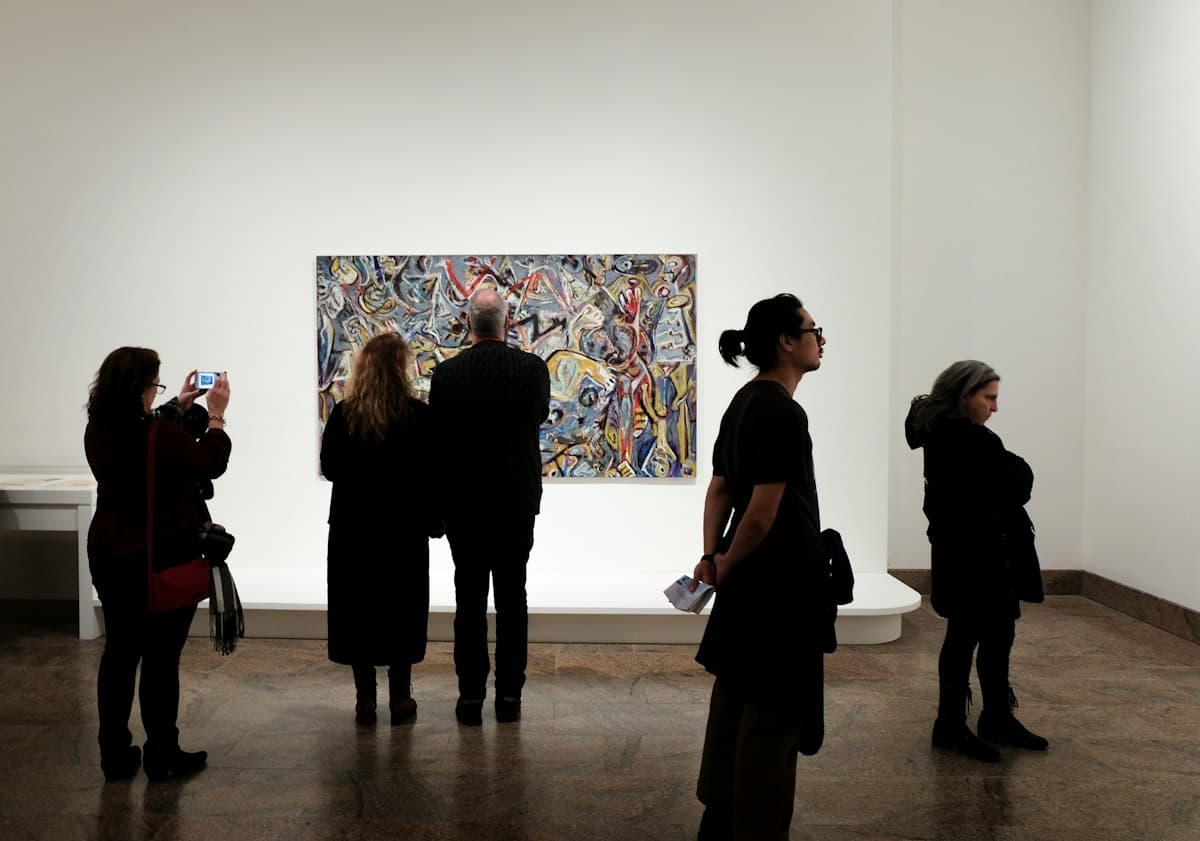
Photo by Andrew Neel on Unsplash
Anchoring works the same way. Most galleries already use it without naming it. Hang a $12,000 piece next to a $2,500 piece and the $2,500 piece suddenly looks reasonable, maybe even like a deal. Hang that same $2,500 piece next to a $600 print instead, and it looks expensive. Nothing about the piece changed. Only what sat beside it changed.
A single show with one ambitious price can lift how the rest of the room reads. A room full of similarly priced work does the opposite: nothing anchors anything, so buyers default to comparing your prices against the last gallery they walked into, not against each other.
Underpricing has a cost that's easy to miss. It rarely shows up as a lost sale. It shows up as a sale that happens too fast, for less than the work should have gone for. Price is one of the few quality signals a buyer has for work they can't fully judge on craft alone, especially early in a collecting relationship. "Why is this so cheap" is a real question people ask themselves, even when they never say it out loud.
Consistency matters more than most artists expect. Raising prices as a career builds is normal, and collectors understand it. What erodes trust is raising prices with no visible reason, or discounting inconsistently so a past buyer finds out a later buyer got the same piece for less. A studio sale framed as a studio sale, a year-end clearance, a handful of named pieces, protects the regular price. A quiet 30% off to whoever asks does not. It teaches your best collectors to wait you out.

Photo by Jelleke Vanooteghem on Unsplash
There's also a distance problem, and it's about confidence more than price. A buyer choosing between two similarly priced pieces from different artists will often pick the one they feel more certain about, and certainty comes from information: dimensions, materials, how it will actually look once it's on their wall rather than on a gallery wall lit for a show. Blenda's AR preview exists for exactly that gap, letting someone see a piece at true scale in their own room before the price has to do all the persuading on its own.
None of this replaces knowing your own costs. Materials, framing, studio time, a gallery's commission if there is one: all of that sets a floor. But two artists with identical costs can price the same body of work $600 apart and both be right, because the number isn't only covering costs. It's telling the buyer what to believe about the work before they've decided anything else.
Go back to that $997 versus $1,000 question with your own price list in front of you. If every price on it is a round number, that's a default, not necessarily a decision. Worth checking which one it actually is.
FAQ
Should art prices always be round numbers?
No. Round numbers signal intuitive value, which suits lower-priced, decorative work. Precise, non-round prices signal calculated value and tend to fit higher-priced or more serious pieces better.
Does discounting art hurt an artist's reputation?
Inconsistent or unexplained discounting does, because it teaches collectors to wait for a lower price and makes past buyers feel overcharged. A clearly framed, occasional sale, like a studio clearance or an end-of-year show, does far less damage.
How does anchoring affect art pricing?
Anchoring means a buyer judges a price by what sits near it, not in isolation. A higher-priced piece in the same room or show makes mid-priced work look more reasonable, while a lower-priced piece nearby makes it look expensive.
Why would underpricing artwork hurt sales?
Price is one of the few signals a buyer has about quality before they fully trust their own read of the work. A price that's noticeably low can raise doubt about the piece instead of making it more appealing.